
Higher education in prisons is reshaping how society approaches rehabilitation and reintegration. When incarcerated individuals gain access to university-level learning, they do not simply acquire knowledge — they rebuild identity, purpose, and long-term prospects. Research consistently shows that educational engagement inside correctional facilities reduces reoffending, strengthens communities, and generates measurable economic benefits for public systems.
Why higher education in prisons matters more than ever
The case for higher education in prisons has never been stronger. Governments, universities, and advocacy organizations are increasingly recognizing that denying incarcerated people access to degree-level study is both a social and economic mistake. Prison populations globally are disproportionately made up of individuals from disadvantaged backgrounds, many of whom lacked educational opportunity before incarceration.

Providing structured academic programs inside correctional facilities directly addresses this inequality. Studies from the United States, United Kingdom, and Australia show that participants in prison higher education programs are significantly less likely to return to custody after release. The research points clearly to one conclusion: learning transforms lives, and that transformation does not stop at the prison gate.
The link between education and reduced reoffending
Data from the RAND Corporation found that incarcerated individuals who participated in educational programs were 43% less likely to reoffend compared to those who did not. Higher education in prisons builds cognitive skills, emotional regulation, and a sense of future possibility — all of which are protective factors against returning to criminal behavior.
Economic and social returns on prison education investment
Every pound or dollar invested in higher education in prisons generates significant downstream savings. Reduced recidivism means fewer prosecutions, shorter sentences, and lower incarceration costs over time. Communities benefit from returning citizens who are more employable, more civically engaged, and more capable of supporting families and local economies.
Access, equity, and the right to learn
A core argument for higher education in prisons is rooted in human rights. Education is a fundamental right, not a privilege to be removed as punishment. Ensuring that incarcerated people can pursue academic qualifications is part of a broader commitment to dignified and humane treatment within justice systems.
Key models and programs delivering higher education in prisons
Across the world, different frameworks have emerged to bring university-level learning into custodial settings. These range from distance learning and correspondence programs to in-person university partnerships where students from outside the prison study alongside incarcerated learners. Each model carries distinct strengths depending on infrastructure, policy environment, and institutional commitment.
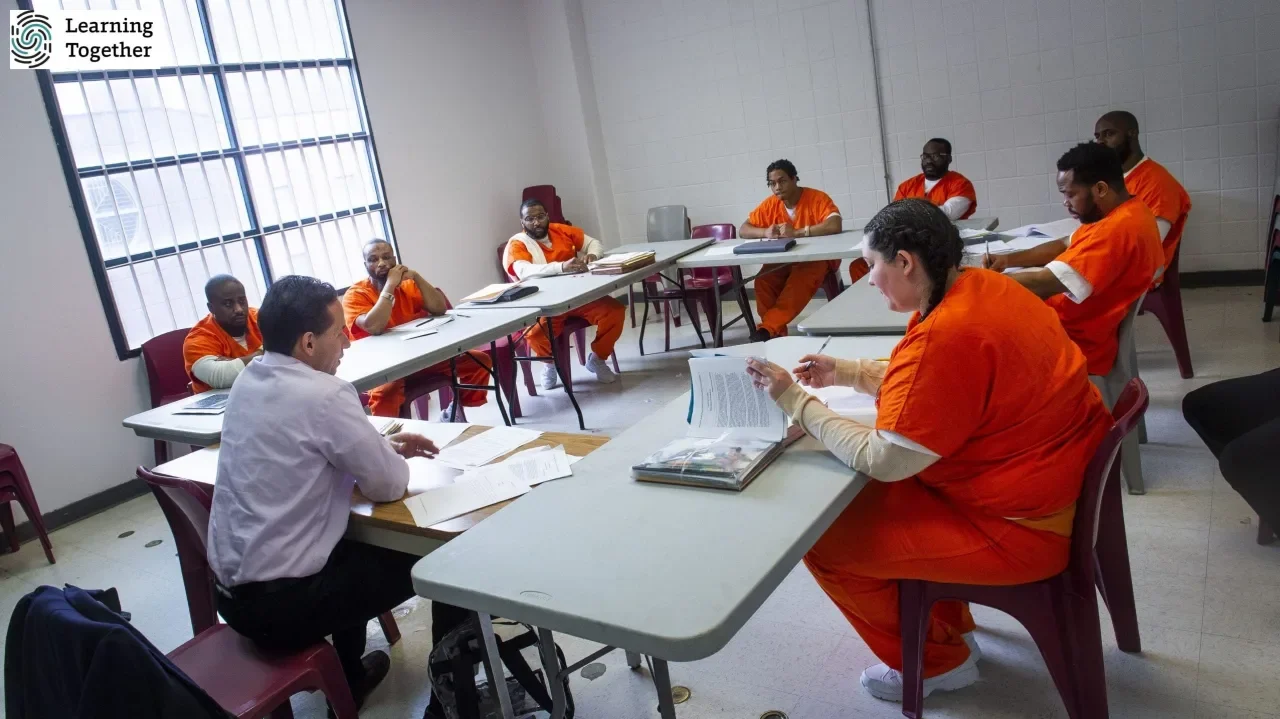
The following table provides a comparative overview of major higher education in prisons delivery models currently in operation:
| Model | Description | Key example | Primary benefit |
|---|---|---|---|
| Distance learning | Incarcerated students complete coursework remotely via printed or digital materials | Open University (UK) | Wide accessibility across security levels |
| University partnerships | Universities deliver on-site degree programs inside prison facilities | Bard Prison Initiative (USA) | Full academic immersion and qualification |
| Co-learning models | Free and incarcerated students study together in the same classroom | Learning Together (UK) | Mutual learning, reduced stigma, civic education |
| Vocational-academic hybrid | Combines practical skills training with accredited academic modules | Various European prison systems | Employment readiness alongside qualifications |
| Release-transition programs | Supports continuation of study after release into community colleges or universities | Justice Education programs (Australia) | Sustained educational engagement post-custody |
Challenges facing higher education in prisons and how they are being addressed
Despite compelling evidence, higher education in prisons continues to face systemic barriers. Funding constraints, restrictive security policies, technology access limitations, and public skepticism about whether prisoners “deserve” university education all create friction. Advocates argue that each of these obstacles is surmountable with the right policy will and institutional partnerships.

Technology presents one of the most complex challenges. Many correctional facilities restrict or prohibit internet access, making it difficult to deliver contemporary digital learning environments. Yet innovative programs are finding solutions — from secure, offline learning platforms to carefully managed supervised computer labs — that preserve security while enabling meaningful study.
Xem thêm: Education in prison benefits — Understanding Education In Prison Benefits For Lasting Change
Navigating institutional resistance and policy barriers
One persistent obstacle to expanding higher education in prisons is institutional inertia. Prison systems are built around security and control, and education programs can be perceived as secondary or disruptive. Advocates and university partners are increasingly working directly with prison governors and policy makers to demonstrate that educational engagement improves facility management and reduces behavioral incidents.
Supporting educators and learners inside custodial settings
Teachers and tutors delivering higher education in prisons require specialized training and ongoing support. The learning environment is fundamentally different from a campus classroom — trauma-informed pedagogy, cultural sensitivity, and flexibility are not optional extras but core competencies. Organizations like the Learning Together Network provide frameworks, peer connection, and professional development for educators working in these complex environments.
Building post-release pathways that sustain educational progress
Beginning a degree inside a prison is only meaningful if the learning can continue after release. Transition support — including university enrollment assistance, financial aid guidance, and mentoring — is essential to making higher education in prisons deliver on its full promise. Programs that connect incarcerated learners with external academic communities before release are proving particularly effective at sustaining long-term engagement.
Conclude
Higher education in prisons is one of the most evidence-backed, cost-effective, and humane interventions available to justice systems worldwide. It reduces reoffending, restores dignity, and strengthens communities in ways that extend far beyond the individual learner. If you want to support or learn more about prison education initiatives, the Learning Together Network offers resources, research, and community for everyone who believes education belongs inside every wall.